Jefferson County is the largest county in Alabama, serving more than 660,000 residents across the Birmingham metro area. Historically, the Department of Revenue (DOR) managed high-volume tax and license renewals through paper-intensive, manual workflows that often led to seasonal backlogs and significant staff overtime.
Since partnering with Grant Street Group in 2018, Director of Revenue Scott Moore and his team have executed a phased modernization strategy. By implementing PaymentExpress, the DOR has replaced manual processes with a flexible, multi-channel payment ecosystem that scales to meet the county’s evolving needs.
Modernizing the Resident Experience
Before 2018, the in-person experience at county tag offices relied on "swipe-only" technology that lacked the modern convenience residents expected. Additionally, the department struggled with a high volume of payment disputes, which required staff to manually track and resolve each case.
By upgrading to PaymentExpress, the DOR introduced modern payment methods that improved both transaction speed at the counter and backend security.
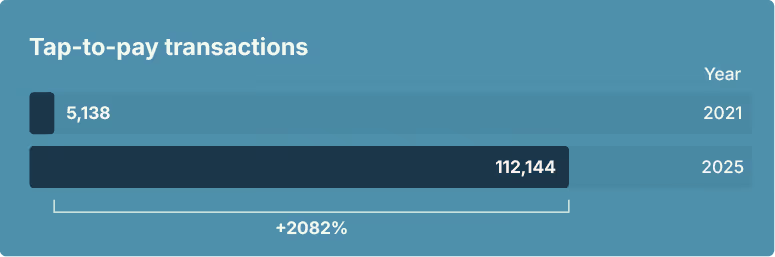
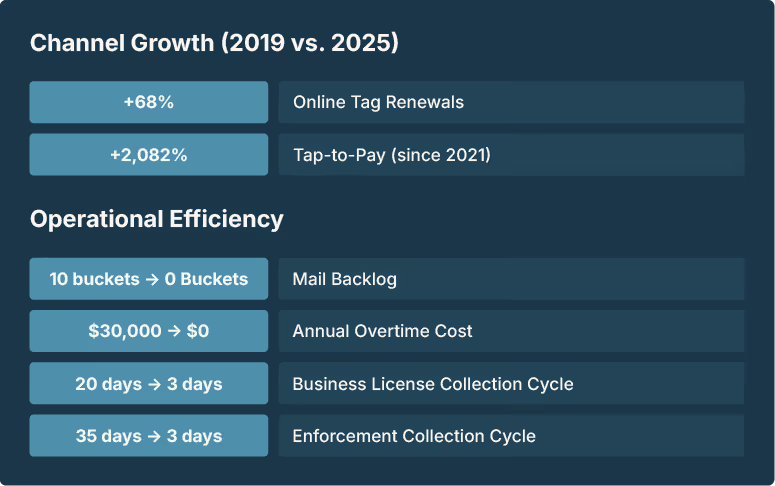
- Contactless Adoption: Tap-to-pay transactions grew from 5,138 in 2021 to 112,144 in 2025. Today, these payments represent roughly 50% of all over-the-counter tag renewals.
- Digital Wallets: Usage of digital wallets such as Apple Pay, Google Pay, and PayPal increased from 1,323 transactions in 2023 to 12,441 in 2025.
- Proactive Dispute Management: Before PaymentExpress, Jefferson County averaged just under 13 chargebacks and disputed ACH payments per month, each requiring the department to respond individually. Since go-live, both chargebacks and e-check returns have declined, and when disputes do arise, PaymentExpress manages resolution end-to-end on the county's behalf.
- Sustained Online Growth: Online vehicle registration renewals increased 68% over six years, reaching 134,275 in 2025.
Overcoming the "10-Bucket" Backlog
The business license renewal cycle, taking place in October and November, was historically the department’s most significant operational hurdle. With roughly 50,000 licenses to issue annually, the DOR faced a massive surge in receiving physical mail.
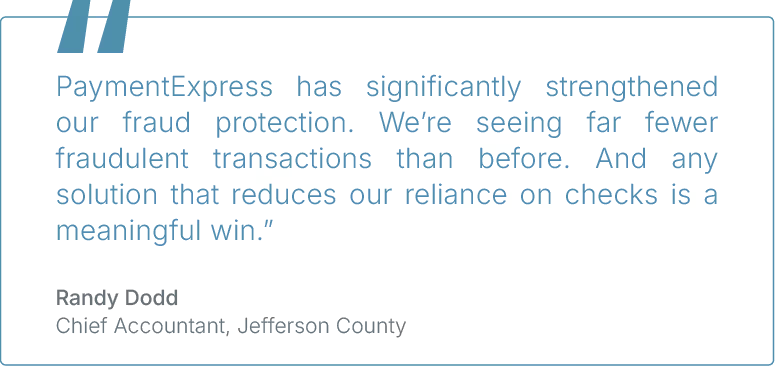
In previous years, the office was overwhelmed by a backlog of mailed checks so large it was measured in physical buckets, often reaching 10 buckets of unprocessed mail. The processing delay was sometimes so long that checks would become stale before staff could deposit them, leading to extensive manual outreach to taxpayers and banks. To manage this volume, the department would spend around $30,000 on staff overtime from October through January.
To move away from these manual bottlenecks, the DOR launched online renewals in 2018 through a PaymentExpress embedded checkout integration with its system-of-record partner, Nitorco. This seamless integration transformed the taxpayer experience: users can now complete the entire renewal and payment process on the county's existing platform.
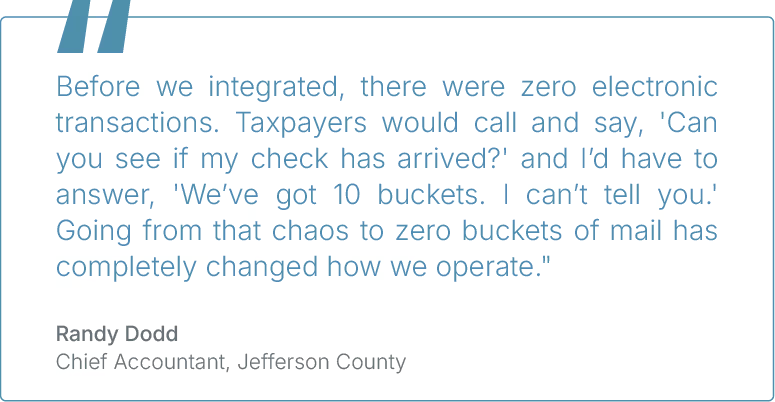
- Eliminating the Backlog: By the 2025 cycle, the department reported "zero buckets" of mail. Roughly 50% of business license transactions are now completed electronically.
- A Seamless Transaction Experience: The embedded checkout integration is so intuitive that taxpayers complete the entire renewal and payment process on the county's existing platform without any indication of a handoff.
- Enhanced Payment Flexibility: Taxpayers now enjoy an improved online experience that makes it easy to pay with modern methods like digital wallets, removing the friction of traditional paper-based renewals
- Reclaiming Operational Sanity: The department no longer requires overtime for this cycle and anticipates saving around $30,000 a year. What was once a high-stress period of evenings and weekends has become a manageable, digital-first process.
Impact by the Numbers
Payment Links: Bridging the "Last Mile" of Collections
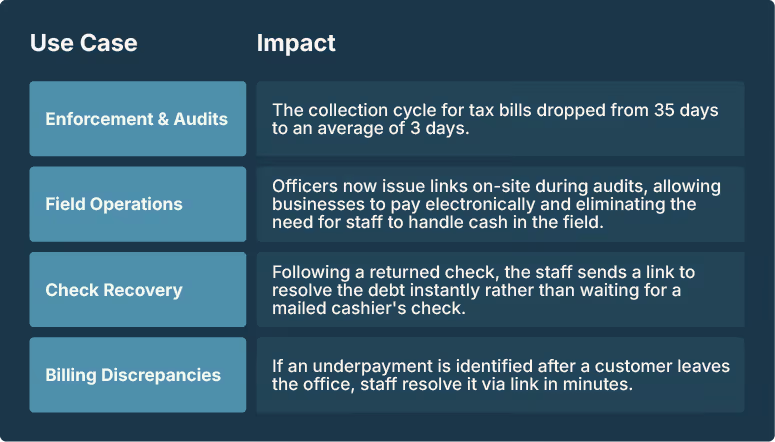
While online portals handle standard renewals, many revenue scenarios, including enforcement audits, billing errors, or document requests, historically required manual follow-ups and mailed checks.
In June 2025, Jefferson County deployed Payment Links to bridge this gap. Payment Links is a PaymentExpress feature that allows staff to handle ad hoc or edge-case collections without generating a formal invoice or requiring a portal login. Staff simply enter the payment amount and description into the system, generating a unique, secure link sent directly to the customer via email or text. The customer then pays through a standard, PCI-compliant checkout page using their preferred method (card, ACH, or digital wallet). Because customers enter their own details, staff never handle sensitive card data, and every transaction flows directly into the county's standard reporting and reconciliation.
In just nine months, the county collected over $1.9 million via 2,462 Payment Links, averaging $10,000 in daily transaction volume.
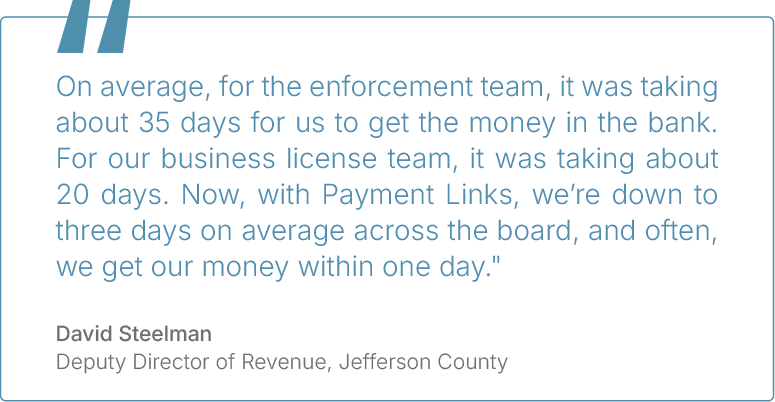
A Unified Foundation for Future Growth
Jefferson County’s success is rooted in the depth of its technical integrations and a strong collaborative relationship between the DOR, Nitorco, and Grant Street Group. This partnership allows the DOR to continuously expand its digital footprint while keeping its systems and reconciliations clean.
What’s Next:
- Alcohol & Beverage Tax: Launched in March 2026, this channel provides a convenient electronic option for the county's recurring monthly payers.
- Dealer Vehicle Registration: A forthcoming project will allow customers purchasing from Alabama dealers to submit documents remotely and pay via Payment Link, eliminating the need for an office visit.
- Expanded In-Person Options: The DOR plans to add credit card readers to the business license counter to support tap-to-pay and digital wallets for in-person renewals.
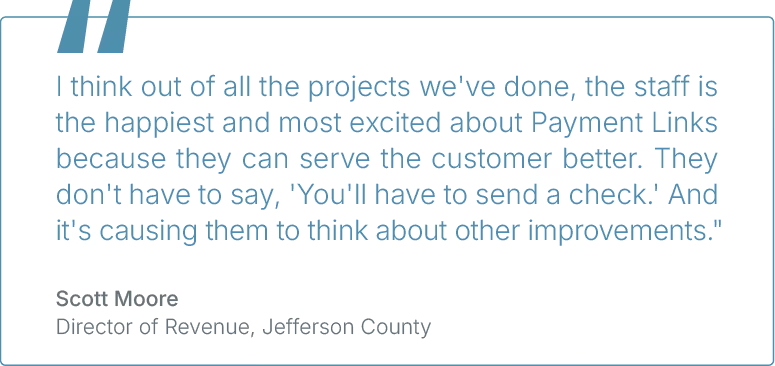
Through a steady commitment to digital transformation, Jefferson County DOR has drastically reduced its reliance on paper checks and manual processing. Powered by PaymentExpress, the department has not only secured its revenue operations and reduced internal costs, but also fundamentally elevated the standard of service for hundreds of thousands of Alabama residents.